
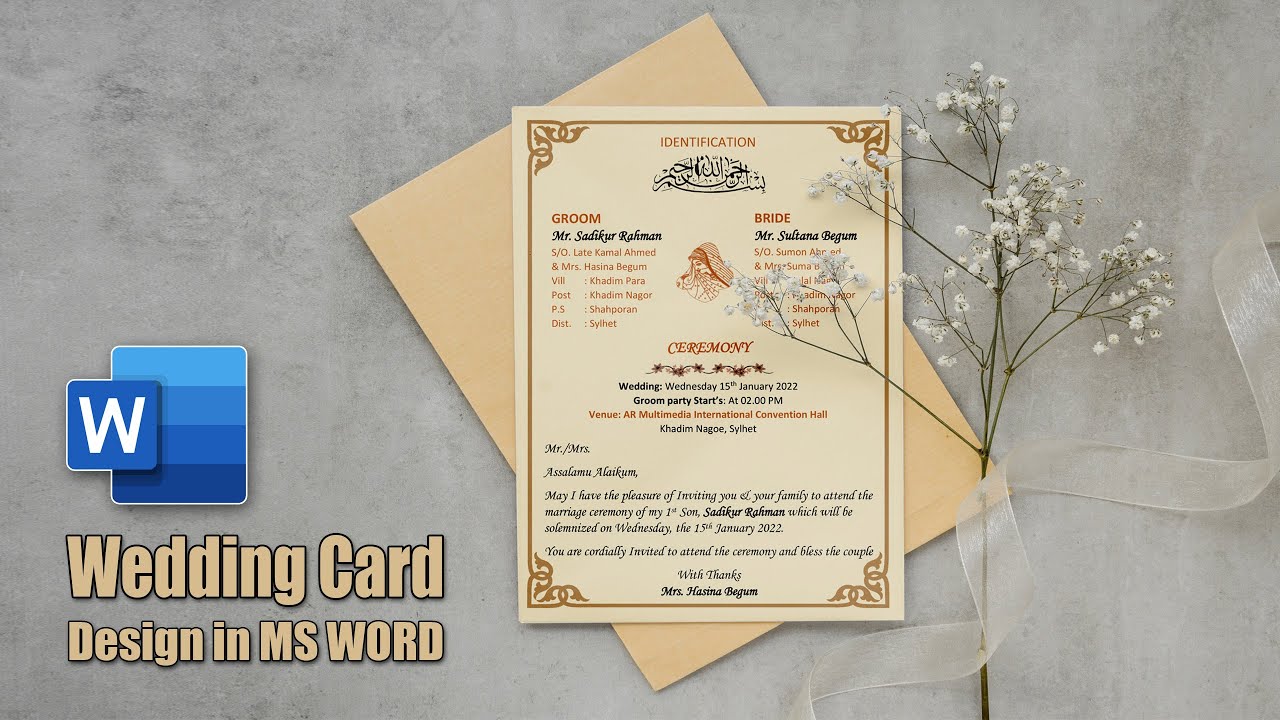
No matter what your faith may be, ensuring that your Muslim wedding invitation aligns with your individual beliefs is crucial. This invitation serves as the initial gesture in welcoming your loved ones to the celebration. The choice of words within the invitation will assist in clarifying the significance of the event. Moreover, it allows you to provide a concise overview of the expectations for you and your family throughout the wedding ceremony.
Traditional Muslim wedding invitation
Traditionally, Muslim wedding invitations are made of silk, satin or metallic paper. These invitations always include prayers to the couple. They also include important information. These include the date of the ceremony, the time of the ceremony, the names of the couple, and the name of the venue.
These wedding invitations are also known as Muslim Nikah cards. Some of these cards may include verses from the Quran. Besides these verses, some invitations may also include a religious symbol. This symbol may be a Quranic verse, a traditional calligraphy signature, or a simple "Bismillah." These invitations are very important, as they are a way for the couple to honor their family members and religious values.
Depending on the couple, they can choose to write in Arabic or transliterate the message. Some people prefer to write in Arabic, while others choose to translate the phrase into English. Some of the best options are the Banana Leaf Card and the Round Shape Cards. They are both green and look like a banana leaf. They add a royal touch to the invitation.
Muslim weddings are filled with beautiful heritage and traditions. Every part of the wedding is conducted according to religious laws and regulations. If you are getting married, it's important to understand the intricacies of Muslim weddings. You may also want to look at these 30 Beautiful Tips For Married Muslims to help you plan your wedding.
Muslim weddings are a wonderful time to honor the traditions and heritage of your culture. Weddings are also a wonderful time to welcome guests to your celebration. The best way to do this is to send out a simple card that is respectful and submissive.
It's also important to choose a design that will compliment the theme of your wedding. If you are having a formal wedding, choose a dramatic color scheme. If you are having a more casual wedding, choose a simple color scheme. It's also important to use Islamic phrasing in your invitation.
You can use any combination of colors or designs to create your Islamic Nikah Invitation Cards. These cards are unique and are a great way to celebrate your wedding.
Religious language
Getting married is a major life milestone and a well-crafted wedding ceremony can help set the tone for years to come. For a Muslim couple, choosing the right officiant is a crucial step. This can be accomplished through a simple questionnaire or in person. Fortunately, the Muslim world is full of cultural and visual traditions. Some couples opt for a more traditional approach, while others opt for a more modern fad. Regardless of their preference, a wedding ceremony is a special occasion and deserves to be remembered for all the right reasons. And the right officiant deserves a tip of the hat. Using a professional to plan, prepare and execute a wedding will go a long way toward making your wedding day a memorable one. Choosing the right officiant is as important as choosing the right wedding attire. In this highly diverse society, wedding attire is a matter of taste and should be tailored to fit the couple's tastes and style.
Attendees removing their shoes in the wedding program
During the Muslim wedding program, attendees are required to remove their shoes. This is to avoid bringing dirt into the mosque. The shoes are kept in a rack. When you leave the mosque, you're required to return the shoes to the rack. It's a simple process.
The shoe-in-shoes phenomenon is a fun prank played by the groom's family on female guests. It's called Joota Chupai and translates to hiding the shoes. In addition to hiding the shoes, the bride's side of the family helps the girls make their move by paying them a good chunk of change.
The wedding program for a Muslim wedding is unique in its own right. While there's no 'rule' about the dress code, there are a few traditions that are considered mandatory. This includes the 'Baraat', the 'Mehndi' and the 'Haldi'. The latter two are purification ceremonies that require participants to wash their hands and feet.
The Nikah is a major ceremony in the traditional Muslim wedding. A mandap, or structure with four pillars, is the centerpiece of the ceremony. The mandap may be accompanied by an engagement ring and other small gifts. The groom is escorted to the mandap to await the bride.
There's a lot of information to be found in the Muslim wedding program, but the most important thing is to remember is to behave in a respectful manner. It's a time-honored tradition. The groom must make sure his mandap is in the same condition as when he arrived. Then, he'll have a chance to greet his friends and family.
The wedding program for a Muslim ceremony includes some fun and exciting traditions. The 'Mehndi' is one of the most memorable parts of the wedding. The bride is decorated in Henna designs, and the groom gets a chance to shower his bride with gifts. It's a special time, and it's also a time of reflection for the newlyweds. The 'Muslim wedding program' also contains a few cultural practices that may be a little less formal than those found in the West.
Including a note to guests about the significance of removing their shoes in your wedding program
Including a note to guests about the significance of removing their shoes in your Muslim wedding program can help people who are not familiar with the Muslim culture to know what to expect. This way, they will know what to do and how to behave during the ceremony.
A Muslim wedding is a very spiritual and important ceremony that must be attended by all guests. The ceremony is short and if guests do not show up on time, they may miss important events. They are also expected to dress modestly and wear bright colours. Men are expected to wear a scarf. Women should wear a white baju kurung.
When arriving at the mosque, guests must remove their shoes. This is a sign of respect to the bride and groom. It also shows that they are honoring the couple's religion. They should also bow their head in prayer when removing their shoes.
The Quran is an important part of Muslim weddings. Non-Muslim guests should treat it with respect, but they may not touch it. They should also ask permission from a Muslim guest before interacting with the Quran. If the Quran is dirty or inappropriate, they should not touch it. However, if the Quran is clean, they may touch it.
The dress code for a Muslim wedding will vary depending on where the wedding takes place. Usually, women wear a white baju kurung and men wear a white baju melayu. The dress code will also depend on the gender segregation that the wedding will be held in. The gender segregation is designed to reduce socialization during the wedding. The groom's family may ask the bride to give him Mahr, a traditional gift. Mahr may include gold or money. If the groom's family does not request the gift, he may choose to give it himself.
If you are not sure what to expect, you can always ask the bride or groom for assistance. They may also be able to explain the traditions of the wedding to you through an informative program.