
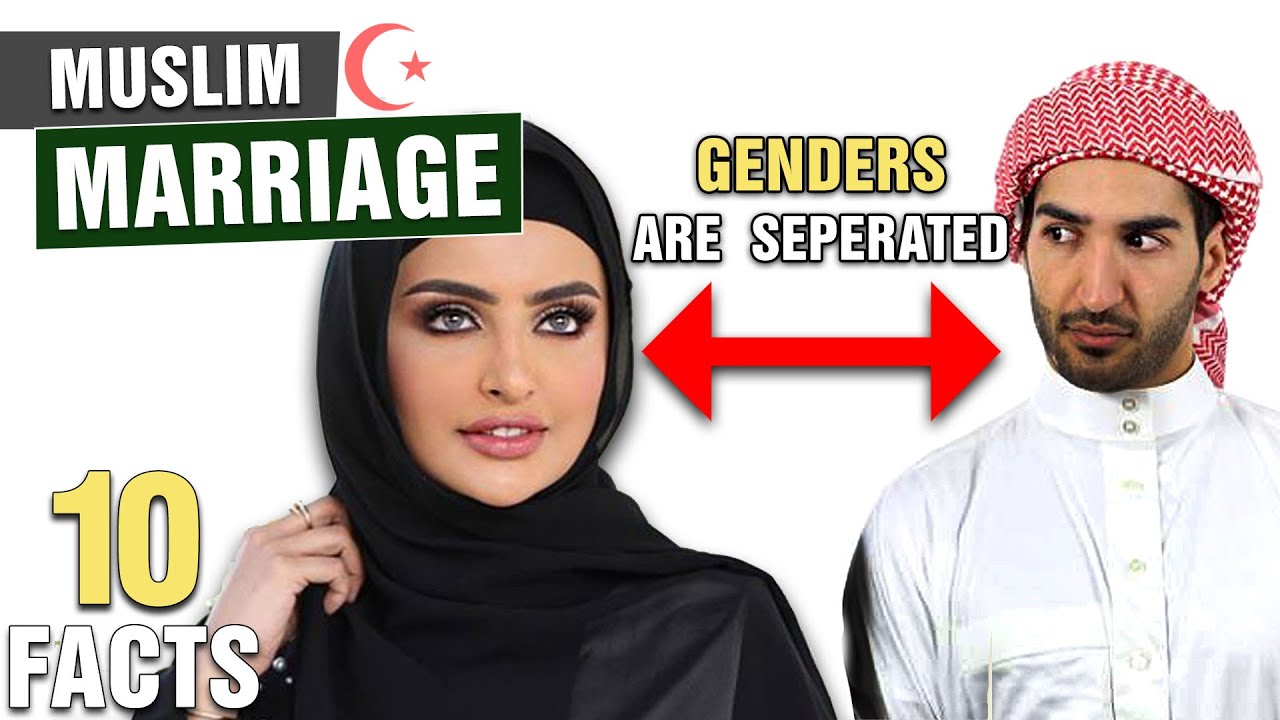
Within the Islamic tradition, arranged marriages are a customary practice. Here, parents and relatives take on the responsibility of finding a match they believe is appropriate for their sons and daughters.
Once a match has been agreed, the community is informed and the religious head performs a special prayer seeking Allah’s approval for the couple to be married.
Arranged marriages
In many parts of the Muslim world, arranged marriages have been the norm. They form strong bonds within one's kin group, which can help families preserve their wealth and prosper economically, socially and politically.
Arranged marriages are generally not a bad thing, but there are many Muslims who find them oppressive and limiting. Nevertheless, there are also many who see them as a good way to find a life partner that is on the same spiritual and moral level as their own.
Often, arranged marriages do not work out as planned because of reasons such as cultural differences, physical attraction and even spiritual differences. Still, if you find yourself in a situation where an arranged marriage is the only option, there are some things you can do to make the relationship work out.
First, ask yourself whether or not you would like to be married to this person. If you do not, then reject the proposal and let someone else know. However, if you do feel that this person is right for you, then go ahead and make the decision to marry them.
Second, make sure that you have all the information you need to make a smart decision. This includes knowing your own beliefs, values and spiritual state.
Third, make sure that the person you are planning to marry is not a threat to your personal safety or well-being. You should not be alone with your new spouse and you should have a guardian to help protect you.
Fourth, consider whether or not you have been properly courted prior to your wedding. This is especially true if you are from a conservative or traditional Muslim community where dating is not the norm.
Fifth, you should be prepared to accept the fact that your arranged marriage may not work out. You may find that the person is not right for you.
In islam, marriage is a sacred bond between a man and woman that should be respected and kept. It should be based on love and mutual respect, not just physical attraction.
Polygamous marriages
Polygamy is a type of marriage that allows a man to take multiple wives. It is legal in many countries, including Afghanistan, Egypt, Pakistan, and Bangladesh.
Polygyny has a long history in Islamic culture, and it is still widely practiced today. It has been criticized by many people, both Muslims and non-Muslims, for its negative effects on women. However, in some cases, it can be beneficial.
In some cases, a man may want to marry more than one wife for reasons that are valid in Islam. In this case, it is important to understand why he wants to take on another wife and what he hopes to gain from this new relationship.
For example, a man might want to have more children with a second wife. This is because he believes it will improve his family life and increase his chance of getting into heaven. In addition, he might also be experiencing a physical or mental health issue that is keeping him from being able to have an intimate relationship with his current wife.
Similarly, a woman might want to have more children with a polygamist husband because she has difficulty conceiving or has had a miscarriage. She could also be in an abusive relationship with her husband and is looking for a way to escape that situation.
When a man takes on a polygamous marriage, he must be willing to make significant sacrifices in his life. He must be willing to be a good husband, and provide for his new wife, as well as the child she may have.
It is also necessary for him to be willing to share his assets with his second wife and to be committed to making their life together a happy one. If he can't meet this commitment, he should not take on a second wife at all.
Men who are considering a polygamous marriage should consider speaking with a therapist to discuss their concerns. A therapist can help them better understand their motivations for taking on a polygamous marriage, as well as help them find ways to deal with the changes that may come with this new arrangement. They can even help them determine if polygamy is right for them.
The Nikah
The Nikah is a Muslim ceremony of marriage. It is a sacred ceremony that requires the consent of both the bride and groom. This must be done without force or coercion from anyone.
In Islam, marriage is a lifelong commitment that is made to Allah. It is an intimate and serious undertaking that involves a lot of planning, work and prayer. The couple should have a good understanding of the obligations and responsibilities that come with marriage, as well as an appreciation for the joys that they will experience together.
Typically, the Nikah is held in a mosque or a place of worship. It is usually overseen by an Imam, a Maulvi or another Muslim who has a deep understanding of Islamic traditions. The Iman or Maulvi will read the Quran and a special prayer for the new couple.
After the ceremony, the bride and groom sign a contract that states they are married. This is a religious and civil agreement that will be used to legally recognize the marriage.
This ceremony also includes a reading of the Fatiha, the first chapter of the Quran, as well as the recital of a special prayer called tawheed, which is a reminder to the couple that they are under the protection and guidance of Allah (swt). A reception is then held for the bride and groom.
A marriage in Islam is considered a lifelong commitment and can last for generations. A man and woman are given the responsibility of taking care of each other and their children, and they must always have a sense of mutual respect and admiration for one another.
In many arranged marriages, the parents of the future groom and the groom's family are tasked with finding the right partner for their child. Once they have found the perfect match, they meet to discuss the details of the marriage, with a chaperone present.
In some cases, the girl may be invited to visit her future husband before the Nikah. These visits are a way for the groom to see her face and determine if she is the right person for him.
The guardian
In Islamic culture, a woman must enter marriage through the consent of a male guardian known as the “wali,” typically her father or a close Muslim male relative. A wali can be male or female, and is not required to be of the same religion as the bride.
This book, written by an Islamic scholar, is a readable introduction to Muslim marital practices and traditional mores, based on Islamic teachings and scriptural references. Although it is aimed at Muslim readers, the positive self-help advice found in many chapters will apply to all relationships.
One of the key features of a Muslim marriage is the bride price, or mahr. This is a sum of money paid to the bride by the groom, and is meant to be an expression of love and devotion. It also protects her financial rights and ensures that she will have her own place to live after the wedding, even if the couple lives together.
The Qur’an prohibits polygyny, and it is not permissible for a man to have more than one wife. This is because it would cause social and moral decline if women were allowed to have more than one husband.
When a girl is young, she can be easily taken advantage of by men who may not be good or moral people, so Islam requires that girls get married only after the permission of their fathers. It is a very important point and it is something that should not be forgotten.
It is essential that the girl has the approval of her father before she gets married, and this should be done as soon as possible. The father or wali should be present during the ceremony, as well as at least two male witnesses.
Another issue concerning a woman’s rights is her ability to work. A married woman can work, and her husband should not object to her doing so unless it is for valid reasons.
Another issue is her right to leave the house. A few scholars have said that a married woman does need her husband’s permission to leave the house, but others have disagreed with this and have said that she can go anywhere as long as she is not causing any harm to herself or others.