
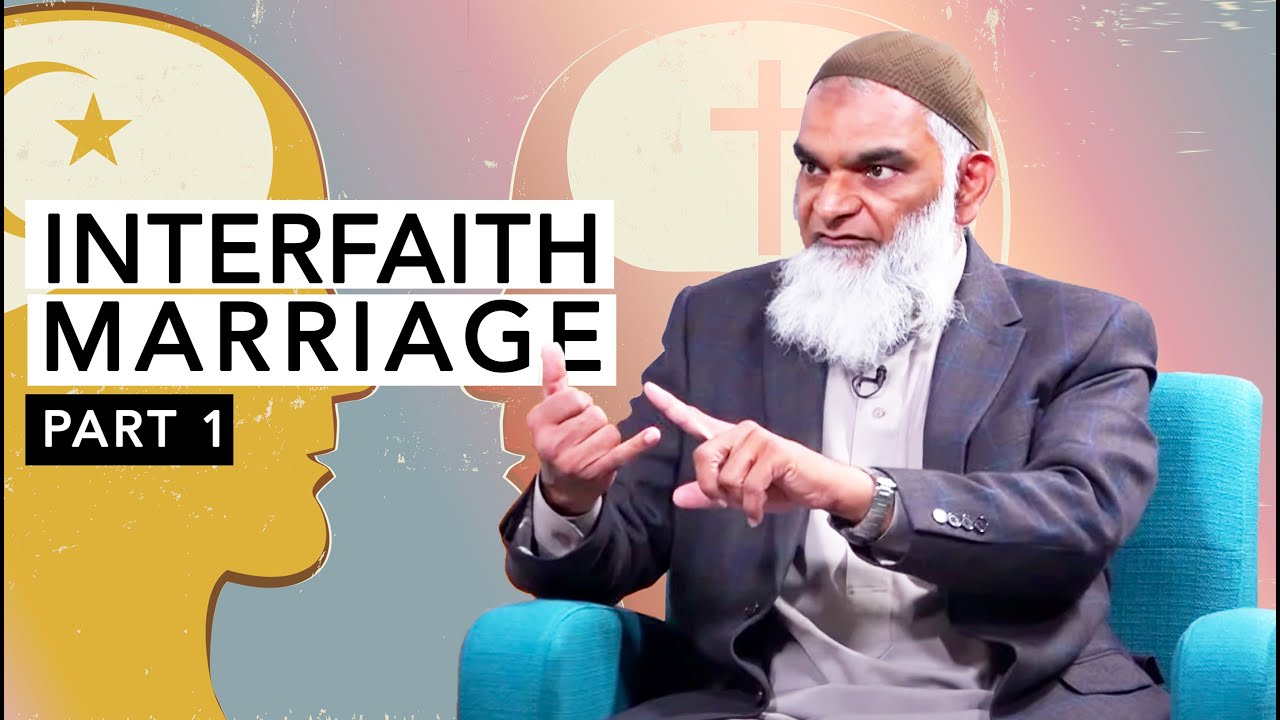
The topic of whether Muslim men and women are permitted to wed individuals from other religions has sparked debate. Various Islamic scholars are divided on the issue, with some stating that such marriages are not forbidden, whereas others assert the opposite.
According to Islamic law, a marriage between a Muslim man and a non-Muslim woman is not allowed. It is believed that this prohibition was enshrined in the Quran.
The Quran
Islam, the religion of Muhammad*, teaches that marriage is a sacred union of two people, a man and a woman, which should be entered into with full commitment. It is a solemn contract and requires both parties to be mature enough to sign it without the need for a guardian.
The Quran teaches that the husband and wife should be faithful to each other, respect one another and work together in fulfilling Allah's commands. It also emphasizes that marriage is a form of Ibadah.
It is a life long commitment to each other and should be based on love, respect and mutual trust. This is a relationship that must be built on the foundations of fidelity and trust, with each of the spouses taking their role seriously and putting in a lot of effort.
In addition, Islam teaches that a woman should be chaste, not lewd, in her behavior, and that her husband must not take advantage of her for sexual pleasures. She must be a good role model and help her husband in the home, raising children to follow in her footsteps and to be responsible for their upbringing.
Furthermore, the Quran teaches that a Muslim man should not marry a woman who is not a Muslim. This is a clear restriction from the Quran, and it helps create a society where the morals of all members are protected.
Moreover, the Quran teaches that it is haram to marry Jews or Christians. This is not because Muslims do not accept these people as part of their faith, but rather because they are considered to be People of the Book who share revealed scriptures perfected in the Qur'an.
However, this prohibition is not applicable to people who believe in these beliefs, but who do not follow the Quran as their revealed scriptures, or are adamant in their adherence to them under critical observation. For example, many white westerners claim to be Christian or Jewish on the basis of their name and their religion.
The Quran also teaches that a Muslim man may marry a chaste Muslim woman, but not a non-Muslim woman who does not adhere to the beliefs of Islam. This is a very important point, and it protects the rights of both sexes to live their lives in peace and tranquility with their spouse.
The Sunnah
Islam prohibits marriage between a Muslim woman and a non-Muslim man. This is because the Qur'an provides no permission for such a marriage. Moreover, according to Islamic law, the children of a married Muslim must always be raised as Muslims. This is because if the wife were to convert to another religion, she would lose her right to raise her children as Muslims.
Some scholars, however, disagree with this ruling. They argue that it is permissible for Muslims to look at potential spouses but should not ogle them or stare at them. This is because it would be inappropriate to ogle someone without a marriage license, and it would also be impolite to stare at someone who is already married. This is a view that goes against the mainstream of Islamic scholars.
The Sunnah teaches that men and women should give importance to the qualities of a potential spouse. It suggests that a woman should marry only a man who is religious, chaste, honourable, of good lineage and righteous. It also suggests that a man should marry only a woman who is not a drunkard or a person who commits sins and evil deeds.
It also instructs that a person should be willing to make a sacrifice in order to achieve this goal, such as fasting. This is because it safeguards chastity and also earns rewards that can facilitate the road to marriage. It is important to note, however, that wealth is not a guarantee and it often fluctuates. It is therefore a good idea to make sure that you have enough money in your bank account before considering marriage.
Several hadiths have been narrated from the Holy Prophet (may peace be upon him) that teach the importance of marriage. It is a sign of love between two people, and it is also a way for them to show their gratitude. Moreover, it is a way for them to teach each other something of the Qur'an.
The Sunnah teaches that marriage is an opportunity to enjoy a life of tranquility and compassion. It is a time when two people can bond together and share their hopes, aspirations, and accomplishments in a secure manner. Moreover, it is a chance to build a solid foundation for future generations.
Traditions
In Islam, there are several different traditions that must be observed in order for a marriage to be successful. One of the most important is the nikah, which is a contract between two people that establishes their rights and responsibilities as a married couple.
The nikah is a legal ceremony that can be performed in a mosque or at the bride's and groom's homes. It is a very important ceremony for both the parties involved, and it helps them understand each other better.
This is also a time for both parties to prepare for the upcoming wedding. In many Muslim communities, a week before the actual wedding, there is an engagement function called Magni that involves both families. This is a celebration where both the bride and groom exchange rings and dry fruits. It is a very important and fun event for both sides of the family, and it gives them a chance to bond and build a strong relationship before the actual wedding.
Another major tradition is the henna function that takes place a few days before the wedding. This is a very special night for the bride, since it's her ladies' night. The henna is done by women in her family, and it's a way to give her a beautiful bridal glow for the big day.
Muslims must be very careful when planning their weddings, as they are required to follow a set of rules that have been laid down in the Qur'an and the Sunnah. These rules are meant to help them achieve a happy and prosperous life, while adhering to the teachings of Islam.
Islamic law also makes it clear that the husband and wife are to act as guardians over each other. This means that the husband is responsible for protecting the wife's legal, social and religious rights. He is not to abuse her or dominate her in any way.
In addition, the husband must ensure that she is properly educated and that her religious needs are met. He must ensure that she has a good home life and a healthy family, and that she works to support herself and her children.
Legality
There is a vast body of Islamic law that governs the formation and enforcement of marriage contracts between Muslim men and women. These laws are derived from the Qur'an and Sunnah and apply to all Muslim citizens, whether they are practicing in the United States or in other Islamic countries.
The legal basis for a marriage is what the Qur'an calls arkan (foundation). It is based on an offer of acceptance and agreement of both parties to the contract, which may take the form of a verbal or written proposal. Regardless of the language used, the terms must be clear and unequivocal to be binding on the parties.
Another foundation is the mahr or dowry, an obligatory gift of property from the husband to the wife at the time of the marriage. This is an important source of financial stability in a Muslim marriage and, as such, should not be taken lightly.
Once the mahr is paid, a husband receives what is called milk al-nikah or milk al-aqd; this milk is his ownership of the marriage contract, and it grants him the unilateral right to dissolution at any time by a pronouncement of repudiation (talaq). The mahr also gives him a financial advantage over his spouse during divorce proceedings because the husband can claim the dower as his own private property, and his wife has no claim on his property after the divorce.
However, as a practical matter, courts often refuse to enforce Islamic mahr agreements that are not properly analyzed under basic contract principles. This has led to devastating outcomes for financially dependent Muslim women in property distribution and spousal support proceedings in the United States.
Islamic jurisprudence prohibits a woman from marrying outside of her faith, and any marriage that involves a non-Muslim man is generally considered unlawful. In some Islamic jurisdictions, this prohibition is even extended to children born in such a union.
As a result, many Muslims are seeking to modify their Islamic mahr contracts in order to address the disadvantages that Muslim women face during and after marriage. These modifications may seem inconsequential or superficial, but they are often necessary to protect the rights of Muslim women and their communities.