
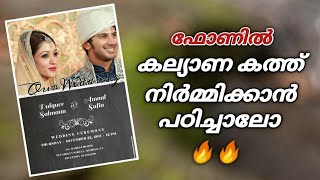
Opting for a marriage in accordance with Muslim customs entails ensuring that you present your partner with a traditional Muslim wedding letter. Nevertheless, there are various approaches to this. Initially, one option is to have the letter imprinted on a customary Muslim wedding card.
Ruksat
Often referred to as the first look, the Ruksat in a Muslim wedding is the moment when the bride and groom see each other for the first time on their wedding day. During the ceremony, they sit side by side and cover their heads with a veil. The groom may also wear a floral veil of roses during the ceremony.
Before the wedding, the bride and groom meet with their families. The bride's father is known as the Wali of the bride. He asks the groom to take good care of his daughter. He also requests that the bride not leave her house until after the wedding.
The groom's family brings gifts to the bride, and gives her Mehr. Mehr is the groom's promise of care and protection to the bride. Mehar is generally monetary, but some families give property to the bride.
The bride is smeared with a turmeric paste and is given a bridal glow by her family. The bride is then welcomed by her parents and other family members. Her sister also welcomes guests with rose water and flowers.
A Muslim wedding ceremony has many rituals, the most important being the Ijab-e-Qubool. This is similar to the Christian "I do" ceremony. The bride and groom must say the Qubool hai three times.
The Holy Quran is kept between the newly-weds. The Maulvi then asks the bride if she agrees to marry. The groom replies with the phrase, "I do" three times. After this, he signs a document called Nikaahnama. The document is signed by two witnesses.
The bride and groom sign a contract to legally marry each other. This document also includes the terms and conditions of the marriage.
Chauthi
Traditionally, Muslim wedding is a joyful function, which involves celebrations, entertainment, and a celebration of the bond between two families. The Muslim wedding rituals vary from region to region and country to country. They are performed in accordance with the Quran's orders.
In this ceremony, the bride and groom are introduced to each other, and each family is introduced to the other. The bride's family showers gifts and blessings on the groom. A grand reception party follows this ceremony. The groom is escorted by his family. The groom may wear a Western suit outfit.
The Muslim wedding rituals are performed by the Maulvi, who is responsible for performing the wedding ceremony. He recites the Quran's prayers and Quranic verses to bless the newly married couple. The marriage contract is signed by the couple's father and the head priest.
The bride and groom are separated by a curtain. The couple is bathed in holy water and a turmeric paste is applied on their bodies. This paste is said to bring out the natural glow on the bride's skin. The couple is also given gifts.
The wedding ceremony is followed by a feast. The bride and groom are presented with a lavish spread. Gifts are given to the couple, and the couple is treated like royalty. There is also fun and dancing.
The wedding day is celebrated with a baraat procession, which is a big procession, and the baraat is loud and colorful. The baraat announces the wedding to the crowd in a couple of hours. It is accompanied by a band playing traditional music. The baraat leads the groom to the wedding venue, where the couple is welcomed by their families.
Nikaahnama
Generally, a Nikaahnama in muslim wedding letter Malayalam is a written marriage contract between the bride and the groom, signed by both parties. It enumerates the details of the marriage and the duties of both parties. It also gives detailed information about the bride and groom's age, parents, and residence. It also lists restrictions for either party and the consequences of any disagreement.
In some Muslim countries, a Nikaahnama is enough proof of a Muslim marriage. It should be read carefully by the bride and groom. However, it should be remembered that a Nikaahnama is only one of the proofs. Other proofs of a Muslim marriage include the Muslim marriage act, the wedding sermon, and the nikah itself.
The marriage sermon includes a couple of Hadiths, including a declaration that Muhammad is the servant of Allah. It also includes three verses from the Qur'an.
The All India Muslim Personal Law Board (AIMPLB) has tried to draft a new Nikaahnama for India. However, it has failed to achieve consensus. It is still in the drafting stages. AIMPLB members agreed that instant triple talaq should not be permitted. It has also pledged to formulate a nikahnama prohibiting Talaq-e-Biddat.
Traditionally, the Nikaahnama has been an elaborate affair. The contract was usually recorded with a masjid. It was also a sign of social status for the bride's family. Today, however, a Nikaahnama can be issued by any trust worthy practicing Muslim.
While the Nikaahnama isn't the only proof of a Muslim marriage, it should be considered one of the most important aspects of your wedding. It gives the bride and groom important information and gives them the power to decide the conditions of the marriage.
Traditional muslim wedding cards
Traditionally, Muslim wedding cards are made of satin, silk or metallic paper. Depending on the wedding theme, some of the popular colours include red, golden, cream and green.
Islamic weddings are celebrated with fervor, in keeping with religious customs and rituals. These religious ceremonies include a wedding reception called Walima. Islamic wedding cards usually carry religious symbols or verses from the Holy Quran.
Islamic wedding cards also carry a symbol called the "Allah" which is believed to be a symbol of divine power and holiness. The symbol is also said to bring blessings for the groom and bride.
Several online stores allow couples to print custom Muslim wedding cards. These cards are available in traditional and contemporary styles.
Traditional Muslim wedding cards are usually made of satin or silk paper and are decorated with floral motifs and classic designs. They often include poetic verses. Some cards also carry the bride's mehndi design and decorative objects such as stones or bindis.
Some Muslim wedding cards feature the "halo" symbol, which is a pious sign that signifies asking god for blessings. The symbol is also said to promote love and understanding between the groom and bride.
If you are having a traditional Muslim wedding, you should incorporate lots of flowers into the wedding ceremony. These flowers also add colour and cheer. The colour green has special significance in Islam. The colour green connotes religious faith, dedication and purity.
Muslim wedding cards are a perfect way to announce your wedding to your friends and relatives. Sending these cards online is an economical and trendy way to send your guests the information they need about your upcoming wedding.
You can also add a wax seal to your Muslim wedding invitations. The seal can be customized with the couple's initials and the wedding date.