
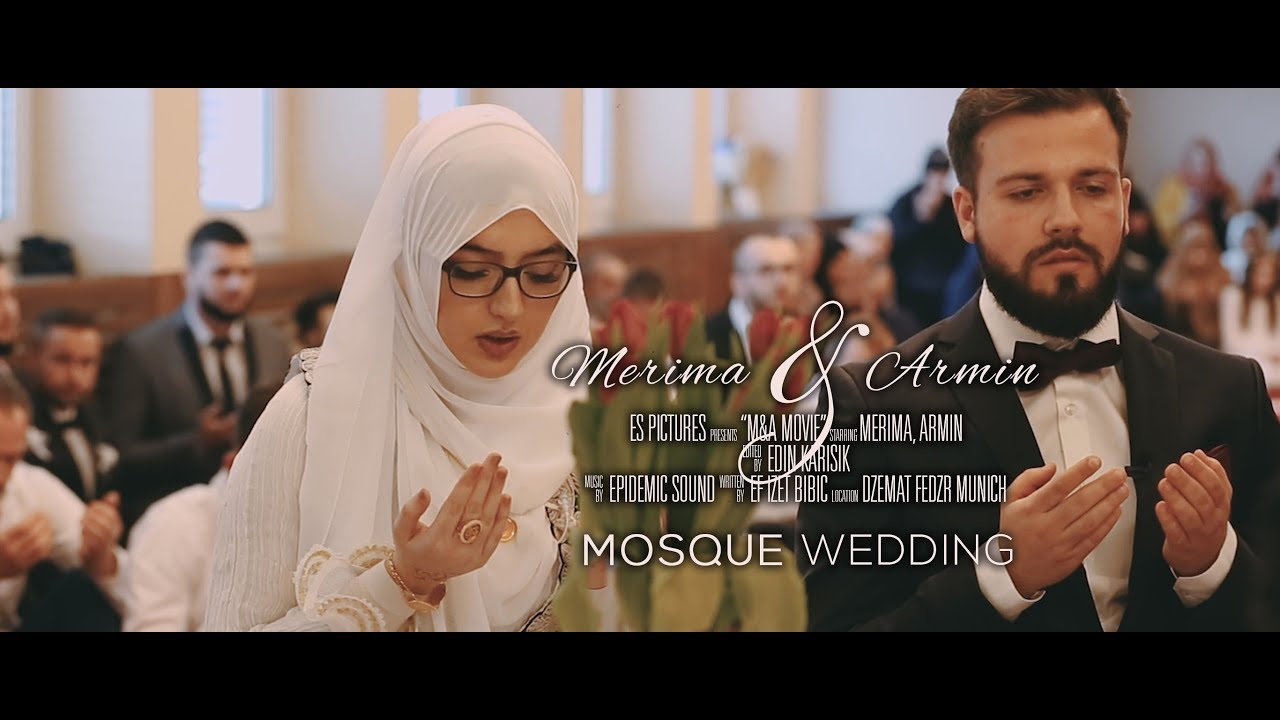
Tying the knot is a significant milestone in someone's life. Numerous aspects need to be thoughtfully considered before the wedding can occur. Among these, one crucial factor is the wedding ceremony. This is a religious event that takes place in a mosque.
Traditional attire for the bride
Depending on the region, traditional attire for the bride at a wedding in an Islam mosque is different. In India, a bride will typically wear a sharara. These are flared, flowy pants that pair with a kurta. They are believed to have originated in the Mughal era.
The bride's outfit may also change throughout the celebration. She may wear a white or red saree to stand out. It's a good idea to visit a tailor to ensure the garments fit perfectly.
The groom's traditional attire for the wedding in an Islam mosque includes a "shalwar kameez. This consists of a white or black tunic with long pants. It has a slanting pleat hemline that compliments most figure types.
The groom is also a major part of the Islamic wedding rituals. He gives a ceremonial gift to the bride, called "Mehr". His gift may include money or flowers. The bride's engagement ring is often included in the gift. The groom and bride may also choose to have a walima, which is a separate celebration that can last several days. The walima is hosted by the groom's family.
The bride's attire for the wedding in an Islam mosque may also include a pasa, which hangs from her forehead. If she is required to wear a head covering, she will need to find a hairstylist. The pasa can also be made of a veil.
Marriage contract
Whether you're planning a Muslim wedding in a mosque or a non-religious ceremony, there are several important aspects you should consider before you get married. For example, you'll need to make sure you have religious requirements in place, and you'll need to make sure you have a contract containing all of the required stipulations.
A Muslim marriage contract acts as a civil contract in Muslim-majority countries, but it also functions as a religious contract. Islamic marriage contracts can include stipulations that protect the rights of women.
Islamic law requires that men financially support their wives. This includes their education and living expenses. If the husband refuses to provide this, the wife has the right to initiate divorce proceedings. This is known as talaq al-mukrah.
In some Islamic schools, the husband has the right to initiate divorce, but some imams believe this is a waste of time. A woman may also have to seek the permission of her guardian.
The Islamic Marriage Contracts guide provides an extensive overview of the legal issues associated with marriage and divorce in Islam. It is a valuable resource for Muslim community leaders, legal professionals, and advocates. It includes an overview of common issues and trends, and offers recommendations for advocates and legal professionals.
Islamic marriage contracts can include provisions for deferred mahr. The stipulation that a woman will give her husband a "gift" may be immediate or postponed until the wife dies.
Nikah ceremony
Among the many Islamic ceremonies, the Nikah ceremony is a religious event that commemorates a marriage in Islam. Normally, it includes a reading of the Qur'an, a speech on the meaning of marriage, and a short sermon.
The ceremony is usually performed by an Imam or a ceremony leader. It may be conducted in a mosque, but can also be held in any other place. The ceremony is usually about five to ten minutes long, but can be longer or shorter.
The Nikah ceremony is usually performed in a hall or room dedicated for the occasion. The couple may sit together or be segregated. It is not uncommon to have sweets and other food served after the Nikah ceremony.
One of the most important parts of the ceremony is the marriage contract. The groom and the bride sign the contract and present it to two witnesses. These two witnesses are responsible for attesting that the bride and groom have both agreed to the marriage contract.
The nikah may be held in the mosque or it may be held in a private room. It is important to make sure the room is large enough for the ceremony.
The ceremony may or may not include music. Some families may have soft background music after the Nikah. It is also not uncommon for the ceremony to be split into two parts.
Mahr
During a Muslim wedding, a bride receives a gift from her husband known as mahr. The gift is a symbol of respect for the bride and is meant to be used by the bride.
Mahr is also referred to as dowry. It is a payment from the groom's family to the bride's family. It is usually a cash gift, but it can also be any kind of valuable asset.
The gift may be delivered immediately upon the couple's marriage or deferred. When a dowry is deferred, it becomes due in the event of the couple's divorce.
While mahr may seem like a splurge, it is a legal requirement for a Muslim marriage. The gift also represents the husband's responsibility to support his wife.
In some cases, the gift is delivered to the wife by her parents. However, the groom has a duty to give his wife a present that is appropriate for her status.
Mahr is a good way to mark the occasion, but it should not be done for the sake of doing it. Instead, it should be done unambiguously and without fanfare.
During the nikah ceremony, there are several tidbits that are important and a few that are unnecessary. One of them is the "mehndi". It refers to a ceremony that takes place prior to the wedding where women are arranged to wear certain garments and decorate them with henna. It is a common practice in many Islamic cultures.
Shadi
Getting married in Islam is not like getting married in a Western marriage. There are a number of different rituals that go into the preparations for a Muslim wedding. The most important of these is the Ijab-e-Qubool.
The Ijab-e-Qubool is a Muslim wedding ritual where the bride and groom are separated by a hijab. They get bathed in a holy water and then get smeared with turmeric paste and sandalwood paste. They also get their hands and feet decorated with henna dye.
The Ijab-e-Mosjid is a Muslim wedding ritual that is held in a mosque. The Ijab-e-Mosjid entails a number of things, such as a mirror. The bride and groom look into the mirror to get a glimpse of their reflection.
Another wedding ritual is the berinai ceremony. This is held two days before the actual wedding. The berinai is a religious ceremony in which the bride and groom are given durud by the elders of the family.
The berinai is usually accompanied by a religious sermon, known as the khutba. The khutba entails a number of things, including a number of verses from the Koran. This is the Muslim marriage equivalent of the haldi ceremony.
The Nikah-Nama is a Muslim marriage contract. It outlines the responsibilities of the bride and groom. It is signed in front of a large number of people. It is also read aloud in Arabic during the wedding ceremony.
Disadvantages of a 'forced' marriage
Those who have experienced forced marriages can tell you that it can be a painful experience. It can result in abuse, emotional blackmail, death threats, and unwanted pregnancies. There are also other forms of violence.
In Islamic culture, women are entrusted with a responsibility to protect their rights. Women must ensure that they include certain stipulations in their marriage contract to safeguard their rights.
These rights include mahr (gift stipulation). A mahr stipulation is a financial agreement that becomes a part of the bride's property after the marriage. It may be payable upon demand, and is considered a supplement to other legal obligations between spouses.
Islamic law is very specific about what stipulations can be included in a marriage contract. Some stipulations are legal, while others are not.
The typical stipulations included in a marriage contract include education, work, living conditions, and divorce rights. Other stipulations are excluded, including gender roles, domestic chores, and protective financial measures.
In addition, women are encouraged to get a civil marriage license to protect their rights. However, many American Muslims respond differently to traditional Islamic jurisprudence. Some American Muslims ignore Islamic marriage contracts altogether. Others, such as the Hanafi school, have made a compromise that allows women to sign marriage contracts without a guardian.
Women also have the right to work and inherit. These rights were granted by Islam in the 7th century. In addition, Islam gave women the right to vote and own property.