
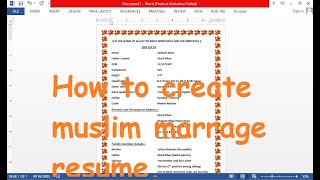
In Muslim tradition, a wedding resume is essential for a Muslim bride. This union is regarded as a holy and spiritual ceremony, and the matrimonial CV must illustrate that. The Nikah, presided over by the bride's father, known as the Wali, cannot proceed without the bride's approval. Male members of her family can serve as witnesses.
Mahr
According to the Holy Quran, the bride is entitled to receive a Mahr, or wedding gift, from her groom. The groom's gift is an act of respect and gratitude. The bride's parents can also offer a gift if they feel like it. The groom's gift to his bride is a symbolic gesture of respect, and is a customary tradition.
The custom of a mahr wedding has been practiced in some cultures for centuries. In the Ottoman Empire, for example, it was common for a bride's parents to pay for her mother's wedding. In Turkey, a mahr wedding is a traditional tradition that is still practiced today.
According to Islamic law, the mahr is a religious requirement in all Muslim marriages. The Quran mentions mahr as a plural form of ajr, which means "reward" or "compensation." It is also the norm in Islamic culture to pay the bride's dowry before the wedding to establish the wife's financial independence from her parents and husband.
A mahr wedding is the first step in a marriage. Before the marriage, a Muslim groom must enter into a financial agreement with the bride. This money is known as the Mahr and is used by the bride to buy gifts, protect herself, or receive a gift from her groom. It is often an agreement that is stipulated in the marriage contract.
The mahr is an amount of wealth that a Muslim male must have before marrying a woman. The Prophet Muhammad often asked a single man to pay his mahr before he entered into a relationship. If the man did not pay his mahr, he was obligated to remain single until he had the money to pay his wife's mahr.
Nikah ceremony
A Nikah ceremony is similar to a Western wedding, with one major difference: alcohol is prohibited. The bride and groom do not exchange vows, but they do sign a contract with an imam, a Muslim priest, and other witnesses that makes the marriage valid according to Islamic law and civil law. While the bride and groom do not traditionally exchange vows, the imam will read some verses from the Quran and give a short sermon to help the couple prepare.
During the ceremony, the bride and groom are presented with a Mehar (gifts) from their families. This is known as the "Nikah ceremony". The Muslim bride will then be asked by the Maulavi three times if she accepts her husband as her wife. After the bride and groom sign the Nikeahnama, the family members will give their blessings to them. The bride and groom are then seated face-to-face and may take their first look.
The Nikah ceremony is conducted in a mosque. It will usually be held in a mosque, with men and women separated. The bride will be asked to consent to the marriage, and two male witnesses are required to confirm that she has consented. If she is under the age of 18, the bride's guardian must certify that she accepts the marriage.
After the Nikah, the bride and groom's families will invite her family and close friends. They will celebrate the wedding in the presence of the Guardians. The ceremony is followed by a banquet. The groom will also invite the rich and poor of the community to participate in the walima.
When Muslim men and women marry, they must follow the principles of the Quran and other Islamic laws. In addition, both parties must sign a marriage contract with two witnesses. The officiant may read the Quran and share some blessings to the bride and groom. The marriage contract must be signed in the presence of witnesses and announced publicly.
The Nikah ceremony can be performed in a mosque or at the home of the bride. Occasionally, the bride and groom may be separated during the ceremony. For the most part, the ceremony is short and does not last more than an hour.
Nikah witnesses
Having Nikah witnesses on your wedding cv is a wonderful way to let others know that you are married. Shariah states that marriages must have at least two witnesses in order to be valid. The witnesses will attest that the couple made the agreement of marriage freely, without any coercion.
The Nikah ceremony is a traditional Islamic wedding ceremony that requires the consent of both parties. A ceremony leader, often an imam, performs the Nikah ceremony, which is a binding ceremony for the bride and the groom. The couple also sign a marriage contract. This makes the marriage valid under Islamic and civil law.
There are several reasons why you should choose to have two witnesses at the Nikah. A proper witnessing process is essential to the validity of the marriage and protects the bride against accusations of adultery. The witnesses on a wedding cv should not be the parents of either party. It is better to choose two witnesses from the community.
A Nikah witness is often an uninvited guest. This is often a case in which the bride and groom do not have close relatives who can act as witnesses. The witnesses will sign paperwork to ensure that the ceremony is legal and does not violate any laws. It is important to note that this is an honor and should be respected.
A Nikah is much more than a legal marriage. It is a religious contract that is signed by two people. Therefore, it is important that you have a competent lawyer dealing with the contract. You may also wish to have an internet marriage, but you will still need at least two witnesses.
In Muslim marriages, the witnesses can be the bride's maid or usher or a friend who is not a close family member. However, this does not mean that you need to be a close friend of the couple to sign this document. A wedding is an official ceremony, with legal ramifications that can affect tax payments and name changes. Therefore, having witnesses on your wedding cv is highly recommended!
Guests should dress modestly for the Nikah. Men and women should remove their shoes before entering the mosque. Women should also wear a headscarf. The Nikah is a religious ceremony, so it is important to dress appropriately. You should also ask the bride and groom what they prefer.
Creating a muslim marriage biodata
Muslim marriage biodata format can be designed in a number of ways. It can be as simple as stating the religion that you adhere to or as detailed as highlighting your lifestyle. You should also include your religious practices such as namaz, which is a five-minute prayer that is performed five times a day. You can also include details about your horoscope, family background, and education.
When writing the bio data, remember to include the names of the spouse and parents. Also, remember to include the names of the other siblings. The eldest sibling should be listed first, and the younger ones should be mentioned after him or her. If the family is a joint family, it is advisable to mention the first cousin. You can also include information on your education background and job details.
You should be clear about the details that you want to include. Ensure that your biodata is easy to read and understand. The reader should be able to get an idea of your personality from this information. Lastly, make sure to be honest and avoid using too much praise or flattering words.
If you have a computer, consider using an online form building platform like Formplus. It allows you to create a customized marriage biodata form. Formplus offers several templates for a variety of purposes. It is possible to customize your form by adding your own background images.
A biodata maker for marriage can help you create an attractive, customized marriage biodata for your spouse. Using an online tool can save you time and money by creating a professional biodata without the hassle of formatting it yourself. It will also enable you to attach pictures or other documents.