
Dance is among the various customs linked to Islamic matrimonial celebrations. Yet, there are specific prohibitions during such ceremonies. It is not permissible for women to engage in dance moves that might be deemed provocative. Furthermore, they must avoid singing and dancing to music considered haram. A notable exception exists for female to female dancing. As per Ayatollah Sistani, dancing between women is allowed as long as it is carried out silently. Additionally, it is not permitted for the bride to be observed wearing makeup, or to be captured in photographs without a hijab.
Oppana
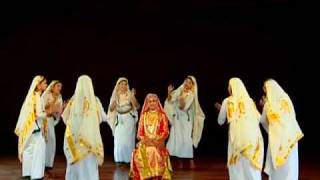
The Oppana is an Islamic wedding dance, which is performed by a group of 15 female dancers and musicians during the wedding ceremony. It is a form of social entertainment, and is performed to a traditional Muslim folk song. Its beautiful costumes and elaborate mehandi designs make the performance a visual feast. The bride sits on a peetam, or chair, amid the dancers.
The Oppana has received a lot of support from the Muslim community in Kerala. It is even included in youth festivals and school performances. Initially, the Oppana dance was limited to Kerala, but today, it has been adopted by the entire Muslim community. It has become one of the most popular items in Kerala youth festivals.
The Oppana dance is traditionally performed by young, female relatives of the bride during a wedding celebration. It is accompanied by clapping and singing. The songs are sung by a leader and then repeated by a chorus. The themes of the songs are usually humorous comments about the bride's nuptial bliss. The Oppana is often performed as part of a stage show today, but it has its roots in the Muslim community.
The Oppana is a traditional Muslim art form that originated in Kerala. It is performed during the eve of the wedding, usually at the bride's home. It has since evolved from a backyard dance to a more elaborate form of entertainment, and it is a great way to show artistic ability and the wealth of the bride's family.
Dabke
Dabke is a traditional wedding dance that is performed by Muslim men and women. This dance originated in Lebanon, Palestine, and Jordan. Its origin is uncertain but it is thought to have originated from the stomping of feet on mud roofs. The dance has been popularized in Lebanon and Palestine by several famous dance troupes, including Assi Rahbani and Mansour Rahbani.
The Dabke is the most popular folk dance in the Levantine region, which includes Jordan, Lebanon, Palestine, Iraq, and Syria. The dance is a line dance where dancers alternate facing the audience and facing each other. In a wedding, this line dancing takes place in a circle and can last for several hours.
The Dabke is performed at Muslim Arabic wedding receptions. It is a popular folk dance performed by professional dancers. The dance is performed shoulder-to-shoulder. Guests are encouraged to join in the Dabke. The dance is part of the Muslim wedding contract and is performed during the wedding feast called Walima, which is celebrated simultaneously with the nikah. It may also take place before the consummation of the marriage.
Dancing is a permitted activity at a wedding, but it is not allowed in front of men. This is because dancing can lead to fitnah. The women may be tempted to describe the dancer to men, which is forbidden in Islam. In addition, the dancer's appearance can be a sign of impurity.
Oppana is an islamic wedding dance
Oppana is an important part of an Islamic wedding. It's a traditional dance with a rich history. Originally, it was performed as a form of meditation. It involves physical work as well as songs and rituals. The goal of the dance is to mimic the flow of life by following the heartbeat and the breath. It is considered a form of divine art and is practiced by both men and women.
Oppana is traditionally performed by males. It is performed before the wedding ceremony and is often accompanied by music in Arabic and Malayalam. Musicians play instruments such as the thabala, harmonium, and elathaalam to accompany the dance. During an Oppana performance, the bride and groom are seated on a peetam, surrounded by the dancers.
Oppana is the most popular dance form of the Moplah. The word oppana means "nearness". Both men and women perform the dance on special occasions such as weddings. It is also performed during the first menstruation of a girl. Oppana is an ancient art form and was often performed as entertainment in Muslim homes in the olden days. Though it has no religious connotations, it does have a social role in celebrations.
Oppana is a very popular dance in Kerala. The dance is performed by up to fifteen female dancers and accompanied by an orchestra. The accompaniment is usually Mappila Pattu, a traditional Muslim song.
Oppana is makrooh
Oppana is a traditional Muslim wedding dance performed by women, usually the bride's maidens or young female relatives. The dancers perform to songs that are based on Muslim folklore, first sung by the leader and then repeated by the chorus.
Music is haram
If you're planning an Islamic wedding, you need to know what is and isn't permissible. Traditionally, the only music that's permitted during a wedding is the daff. However, some religious groups do allow the use of musical instruments. If you're planning to hire a band to play music at your wedding, you need to be careful. It's important to follow Islamic guidelines and avoid any kind of music that could interfere with prayer.
If you're planning to perform a wedding ceremony with a band, you need to make sure that you don't play a song that incites lust. Some religious scholars say that if the musicians perform their music with the wrong intention, it could lead to adultery. However, some religious scholars have made exceptions for specific situations. For example, you can use a clarion or a pipe to play a song at your wedding.
If you're planning a wedding dance, you should be careful about what kind of music is played during the reception. Some Islamic scholars consider dance music to be haram, while others say it is not. However, there are a few conditions to ensure that the music you choose doesn't break Islam's morals. For example, it shouldn't include songs that encourage lying, showing haram parts of the body, or involving namahram men.
A wedding dance that contains a song that promotes sex is haram. It's also forbidden to use music that encourages adultery, drugs, or violence during a wedding. However, songs that encourage love are allowed.
Dabke is a fun way to celebrate at a Muslim Arab wedding
Dabke is a dance popular in Muslim Arab communities. The dance involves a lead dancer who leads the group through various moves. It is performed at weddings, family celebrations, and national holidays. It is performed by men and is marked by strong steps and stomps. The key element in the dance is the Laweeh, or rhythm.
Dabke originated in Levantine countries, including Lebanon. It signifies the history, struggles, and hope of the Palestinian people. During a dabke, women wear a long embroidered dress while men wear a wide belt and leather shoes.
Dabke is an entertaining way to celebrate at a Muslim Arab wedding. Men join hands and perform quick footwork. Women wear beautiful and elegant outfits. The couples may hire belly dancers to perform the dabke for the guests. The dance is an integral part of the ceremony and can last as long as a week.
Dabke is an important part of a Muslim Arab wedding. It is the main celebration for the newlyweds and includes a number of customs and traditions. Dabke, a traditional folk dance performed by professional dancers, is a popular way to celebrate the new couple.
The first dance of the celebration is known as the zaffe. It is the bride and groom's grand entrance, and it is the first dance as husband and wife. A "dabke" team performs this dance as the bride and groom enter the reception hall. Often, the bride's family members form a circle around the dabke group. Dabke is a traditional dance, and music plays a large role.